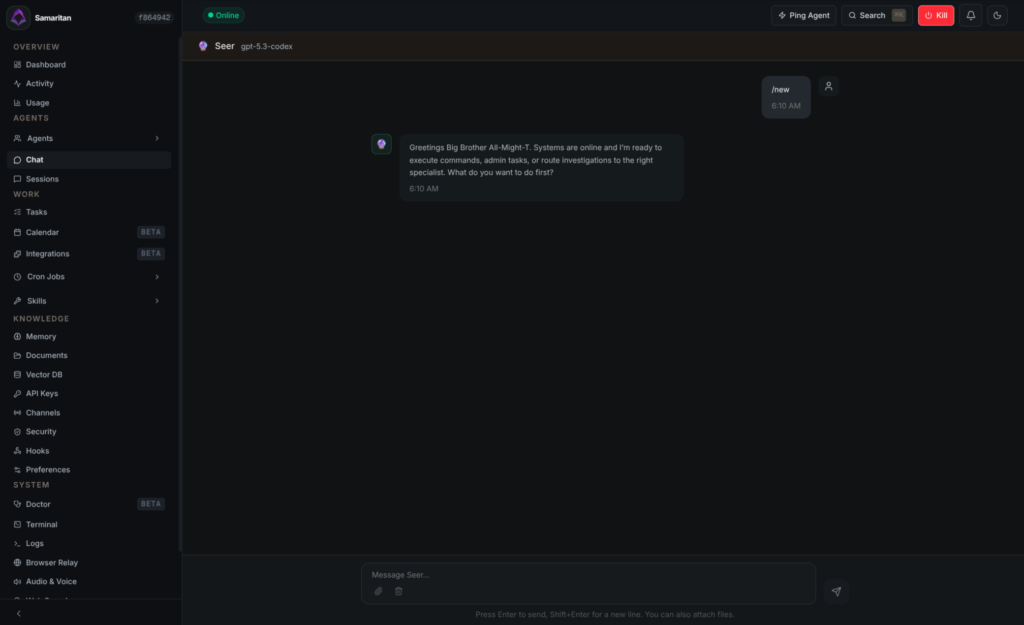
The first real problem with Samaritan wasn’t a missing feature or a configuration option I hadn’t found yet. It was more basic than that. Every time OpenClaw started up, it forgot who it was.
I had written a SOUL.md file that defined Samaritan’s identity, investigative discipline, and operating rules. The platform was supposed to load that file at startup and become the agent I had designed. Instead, it kept coming back as a generic assistant. Helpful. Cheerful. Completely useless for what I was building. The model I was running at the time, a local 8B uncensored model through LM Studio, would hit 100% completion instantly without actually processing the prompt. No tools. No identity. No memory of anything.
It took three days of step-by-step troubleshooting to find the real cause. It was a mess. There were multiple SOUL.md files scattered across different directories, none of them in the workspace OpenClaw was actually launching from. On top of that, the agent context was too large for the model’s effective context window, so OpenClaw was silently trimming the critical parts, including the identity file, before the model ever saw them. The platform wasn’t broken. It was quietly discarding everything that mattered.
When we (ChatGPT and I) finally got it right and Samaritan responded in character for the first time, clinical and direct, identifying itself and me correctly and ready to work. Three days on this and I had serious doubts about whether this new platform was stable enough to build a production application on. That first correct response didn’t erase the doubts completely, but it was enough to keep going.